

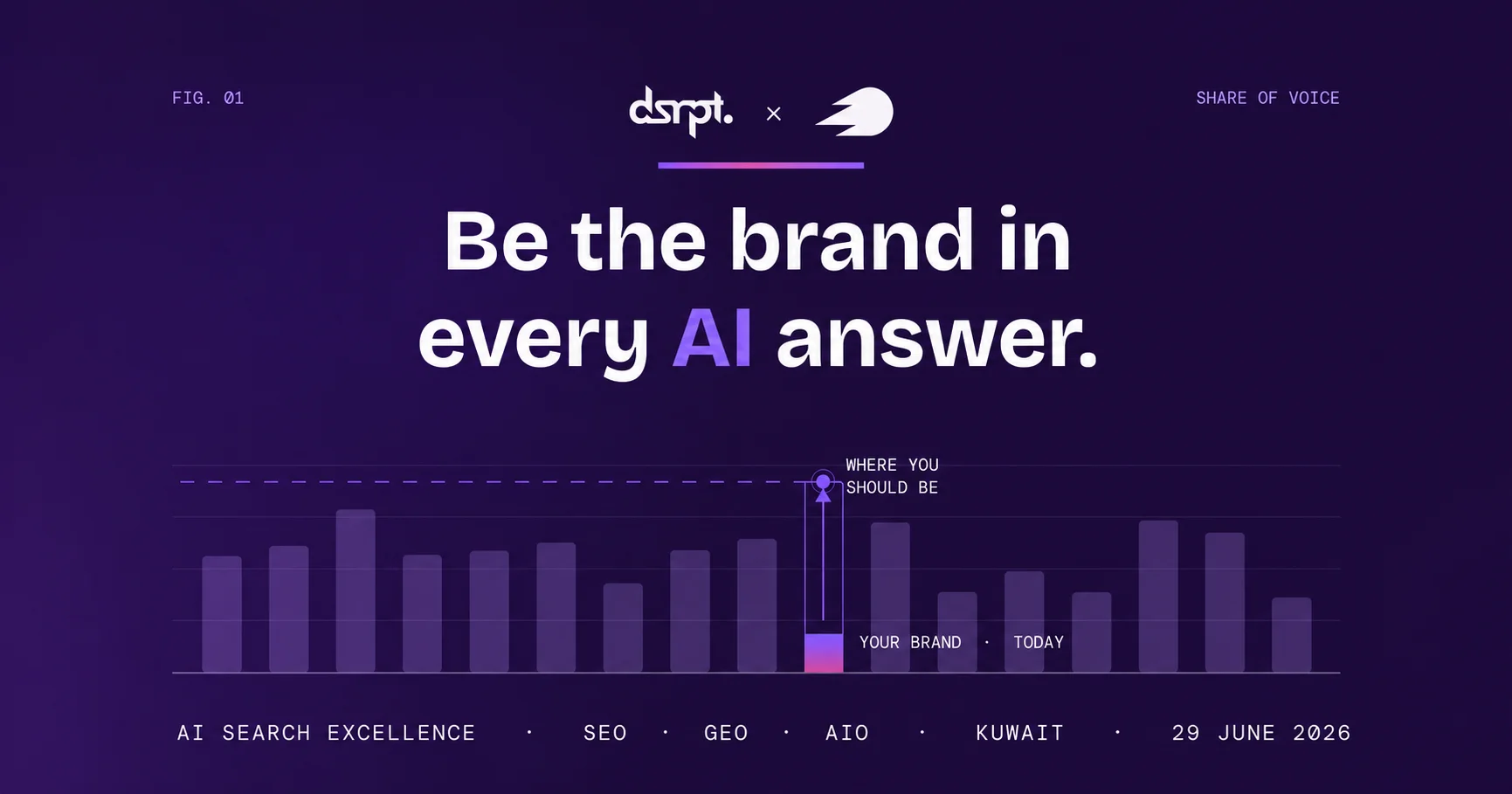
Yesterday, on Monday 29 June, we filled a room at the Rafa Nadal Academy in Kuwait with senior brand leaders for one question: when someone asks ChatGPT, Google AI Overviews or Perplexity for a recommendation in your category, does your brand show up, or does your competitor's?
This was DSRPT's first event. The first of many. We partnered with Semrush's global enterprise team to bring their AIO capability to Kuwait for the first time, and we kept the room small on purpose: 30 seats, top-tier brands and decision-makers only.
Here's what was said, who said it, and why it matters for any brand in Kuwait and the GCC that wants to stay visible as search changes underneath it.
The shift: search has a new front page
Rachel Phillips, Semrush's Partnership & Channel Lead for MEA & UK Enterprise, opened the session and set the frame. Then Hadi Gebara, DSRPT Managing Partner, took the room through the market and the shift happening right now.
The short version: your customers don't scroll ten blue links anymore. They ask an AI assistant for a shortlist. They let Google's AI Overview answer the question before a single result gets clicked. Around 70% of searches now end with no click at all, because the answer sits on the results page itself or inside an AI response.
That changes the job. For years the goal was to rank a page. Now the goal is to be the brand the AI names when it answers. If you're not in that answer, you're invisible to the people closest to buying, and you won't even see it happening in your old reports.
Hadi's point to the room was direct: the brands that move in the next 12 months own this space. The ones who wait spend next year chasing it.
We've written more about this shift in Google vs ChatGPT in 2026: track where customers find you and how AI will redefine digital marketing in the GCC over the next 12 months.
SEO and AIO together: optimising for one isn't a strategy
Gabriel Vantaggiato, Semrush Regional Sales Director, picked up the thread with the most useful argument of the morning: stop treating SEO and AI search as separate jobs.
A lot of teams hear "AI search" and assume their SEO work is now dead weight. It isn't. The signals that make Google trust your pages, clear content, real authority, clean structure, are the same signals AI systems read when they decide which brands to cite. Optimising only for classic Google leaves you out of AI answers. Optimising only for AI, with no SEO foundation, gives the models nothing solid to pull from.
So the strategy is both, working as one system. SEO earns the authority. AIO makes sure that authority shows up where customers now look. Picking one and ignoring the other isn't a strategy, it's a gap your competitor walks through.
If you want the practical version of this, our guide on how to rank on ChatGPT, Gemini and Perplexity covers GEO for Kuwait businesses step by step.
Quick definitions, no jargon
If the acronyms blur together, here's the plain version:
- SEO (search engine optimisation): getting your pages to rank in classic search results, the blue links.
- GEO (generative engine optimisation): getting your brand cited inside AI-generated answers from tools like ChatGPT and Perplexity.
- AIO (AI optimisation): the wider practice of measuring, tracking and growing your brand's presence across every AI platform, treated as a system rather than a one-off.
The AIO dashboard: seeing your AI visibility in real time
Sofiene Turki, Semrush Enterprise Consultant, closed with a live walkthrough of the AIO enterprise dashboard. This was the part the room leaned in for, because it turned an abstract worry into a number on a screen.
It was a basic walkthrough, not a deep dive, and that was the point: see what the tool actually shows you before anything else. A few things it puts in front of you:
- AI visibility score so you know how often your brand surfaces in AI answers, not just where your pages rank.
- Share of voice against named competitors: how much of the AI conversation in your category you own versus them.
- Gap analysis showing where competitors are cited and you aren't, which is usually where the fastest wins sit.
Most enterprise brands have no idea what this looks like for them, because the tooling to see it hasn't been on the market here. Three in four enterprise brands have no AI search strategy at all. That's the gap, and it's the reason we brought this to Kuwait.
DSRPT is the only enterprise Semrush AIO partner in Kuwait, the access point for this capability in the region. Worth noting for context: Adobe recently moved to acquire Semrush, a sign of how seriously the industry is taking AI-powered brand visibility. We broke that down in Adobe to acquire Semrush for $1.9 billion.
The speakers
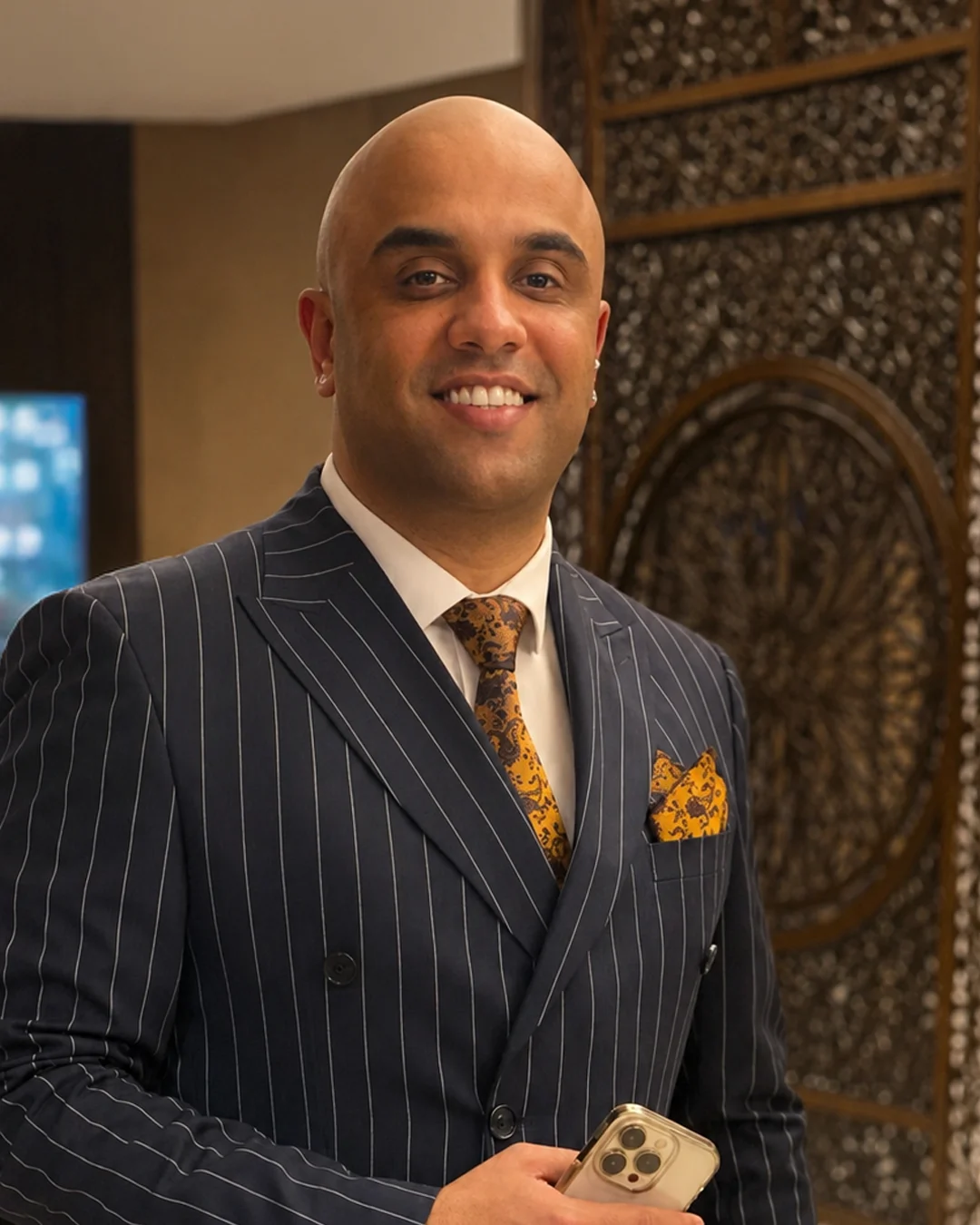



This was the first. More are coming.
This was DSRPT's first event, and it won't be the last. We're planning more sessions on AI search, visibility and the tools that are reshaping how customers find brands across Kuwait and the GCC.
If you lead a brand here and you want to know where you stand in AI answers today, that's exactly what we measure. The first step is a clear picture: your AI visibility score, where competitors outrank you, and where the quick wins are.
Be the brand in every AI answer. Talk to DSRPT about an AIO engagement, or get on the list for the next session.