

Every app agency in the Gulf will tell you they deliver. Some put a number on it: 100% success, 100% delivery, guaranteed. It reads well. It also tells you almost nothing about whether your app will work, get used, or make money.
Here is what that number actually measures: the agency finished the build and handed it over. That's it. It says nothing about whether people downloaded it, whether KNet checkout worked on the first try, or whether the Arabic layout broke on an iPhone. An app can be "delivered" and still be dead on arrival.
If you run a business in Kuwait, Saudi, the UAE, or anywhere across the GCC and you're about to spend real money on an app, this is the guide I wish more people read first. No pitch. Just what to look at, what to ask, and where the money really goes.
What you're actually paying for
A mobile app is not one thing. It's four, and the price moves with each.
There's the design, which is what your users see and tap. There's the app itself on the phone, iOS and Android. There's the backend, the part nobody sees that stores data, handles logins, and talks to payment systems. And there's everything after launch: fixing bugs, updating for new phones, keeping it alive.
Most quotes only price the first three. The fourth one, the part that runs for years, is where projects quietly bleed money. Ask about it before you sign.
In Kuwait, a simple app or a first version (an MVP, the smallest thing worth shipping) usually runs from around KWD 3,000 to KWD 30,000. Medium apps with payments, accounts, and real features sit higher. Enterprise platforms go past KWD 100,000. Kuwait is on the cheaper end of the GCC, but cheap and right are not the same thing, and I'll come back to that.
We broke the full picture down separately in App development: what it takes to build a mobile app people actually use.
How long it really takes
Two to nine months. That's the honest range.
A simple app: two to three months. Something medium with payments and user accounts: three to six. A full enterprise platform: six to twelve months or more. Anyone promising a polished, payment-ready app in three weeks is either cutting corners you'll pay for later or quoting a template with your logo on it.
The timeline isn't just coding. It's design rounds, testing on real devices, app store review (Apple alone can take a few days to a week per submission), and the back-and-forth when you see the thing and realise you want it different. Build that into your plan.
The two things GCC apps get wrong
Here's where regional apps live or die, and where a lot of generic agencies fall short.
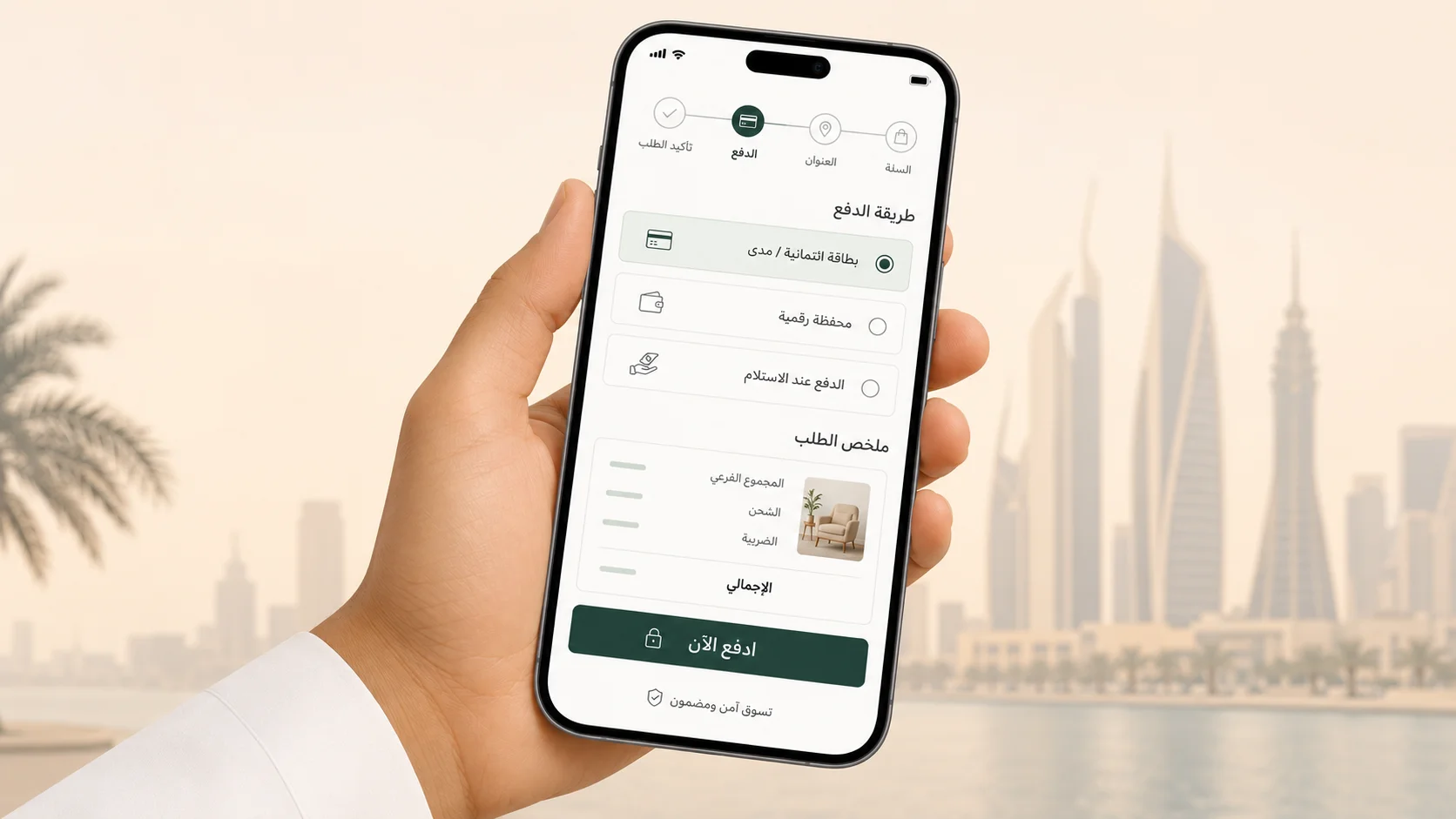
Payments. In Kuwait, KNet handles more than 85% of card transactions. If your app doesn't take KNet, most of your customers can't pay you. Same logic for Mada in Saudi and Benefit in Bahrain. The good news: providers like Tap Payments give you one integration that covers KNet, Mada, Apple Pay, Google Pay, and cards across the whole Gulf. The catch: it needs real setup, your commercial registration, KYC documents, and a few days for live credentials. An agency that's done this before saves you weeks. One that hasn't will learn on your budget.
Arabic. This is not a translate button. Arabic reads right to left, which flips the entire layout: navigation, buttons, icons, the lot. Done properly, an Arabic-first app feels native to a Kuwaiti or Saudi user. Done as an afterthought, text overlaps, buttons land in the wrong place, and it screams "foreign app." Ask to see a live Arabic app the agency actually built. Not a mockup. A real one on a real phone.
If you're weighing up how the app gets built underneath, Mobile app stack in Kuwait: React Native, Flutter or native walks through the tech choices in plain terms.
Why "100% success" is a red flag, not a feature
No serious builder guarantees success, because success isn't theirs to guarantee. It depends on your market, your pricing, your marketing, and whether people actually want the thing. A development team controls the build quality. They don't control whether your idea sells.
What a good team can promise is real: clear scope, a fixed price for that scope, regular demos so you see progress, code you own, and a plan for after launch. That's worth more than any percentage on a homepage.
When you hear "100% success," translate it to "we finish what we start." Fine. Now ask the harder questions:
- Can I see three apps you built that are live in the app stores right now, ideally with Arabic and KNet?
- Who owns the code and the accounts when we're done, me or you?
- What happens if the app breaks two months after launch? What does support cost?
- What's NOT included in this quote? (The answer to this one tells you the most.)
- Will I get a working version to test partway through, or only at the very end?
A confident team answers all five without flinching. A sales-led one gets vague.
We wrote a fuller checklist for this in Top mobile app development companies in Kuwait: how to pick the right one and Mobile app development company in Kuwait: the honest buyer's guide.
Cheapest quote, most expensive mistake
The lowest number on the page is rarely the lowest cost over two years.
A cheap build often means a template, no real testing, payments bolted on badly, and no plan for updates. You save money on day one and pay for it every month after, in lost sales, bad reviews, and a rebuild eighteen months early. I've seen businesses pay twice because the first app was a bargain.
This doesn't mean spend the most. It means judge the quote on what's actually in it. A KWD 5,000 quote and a KWD 15,000 quote are often building two completely different things. Get both to list exactly what you get, then compare like for like.
The mistakes that cost the most usually happen on day one, before any code is written. Mobile app development: 7 costly mistakes founders make on day one covers the ones we see again and again.
What to do now
If you're at the start, do three things before you talk to anyone.
Write down what your app must do in plain sentences, the five things it absolutely needs, separate from the nice-to-haves. Decide if you need payments and Arabic from day one (most GCC apps do). And set a budget range you're comfortable with, knowing the cheapest option is rarely the cheapest outcome.
Then talk to a team that builds for this region, shows you real work, owns up to what an app can and can't do, and stays around after launch. At dsrpt we build mobile apps for businesses across Kuwait, the GCC, and Australia, and we'd rather tell you the honest version than sell you a number. If you want a straight read on your idea, get in touch and we'll tell you what it really takes.