

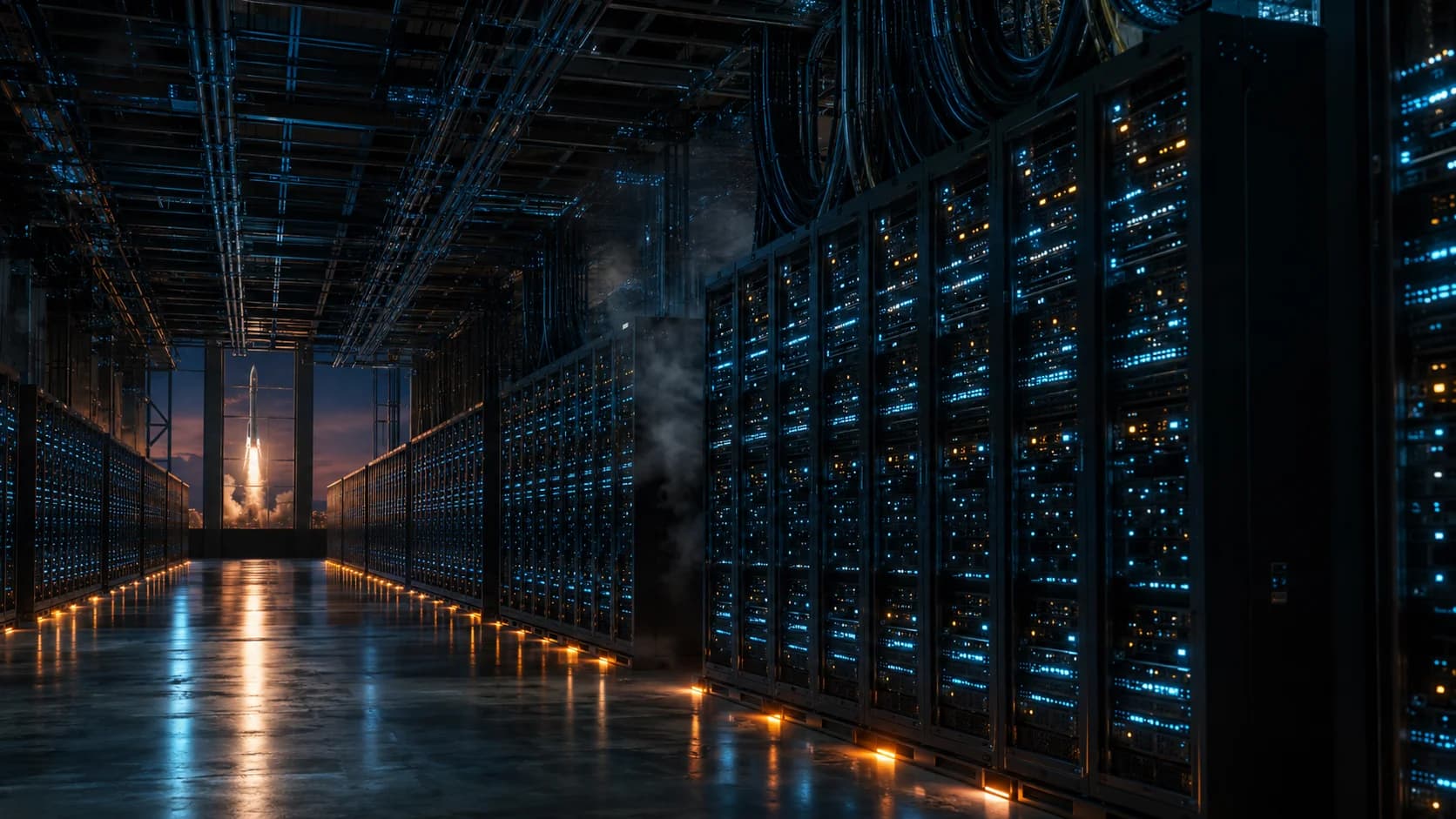
Three months ago, Elon Musk publicly said Anthropic "hates Western civilization."
Last week, he handed them the keys to his entire supercomputer.
On May 6, Anthropic signed a deal to take over all capacity at Colossus 1 — SpaceX's 220,000-GPU, 300-megawatt data center — within a month. The same Colossus that trained Grok. Now training Claude. Musk's only public comment was that nobody at Anthropic "set off my evil detector."
Welcome to 2026, where the AI compute crunch is stronger than the rivalry.
Here's what actually changed in your Claude account, why Musk reversed course, and what the bigger compute land grab means if you build anything on top of these models.
What hit your account on Monday
Three things flipped the second the deal was signed. No press tour, no slow rollout — just changes:
- Claude Code five-hour rate limits doubled — across every paid tier. Pro, Max, Team, Enterprise. If you were hitting the ceiling at hour four of a heavy build session, you're now closer to hour eight before the throttle kicks in.
- Peak-hour caps for Pro and Max are gone. Used to be: 9am-5pm in your region, you'd quietly get less throughput. That's dead now.
- Opus API rate limits jumped substantially. Anthropic published a table with the new numbers. If you're running agentic workflows or long-context tasks, this is the one that matters most.
I checked my own usage this morning. Two of the workflows I'd previously chunked into smaller jobs to stay under the per-minute Opus limit — they now run end-to-end without hitting the wall. That's not a small thing when you're billing clients hourly for build time.
Why Musk leased out his own supercomputer
This part is the most underreported piece of the story.
xAI merged with SpaceX earlier this year. Grok's training migrated to Colossus 2 — a much bigger cluster with 550,000 GB200 and GB300 accelerators, pulling over 1 gigawatt of power. The new toy works. Colossus 1 — still housing 220,000 NVIDIA GPUs and burning hundreds of megawatts of electricity — became a stranded asset. Powerful but unused. Hemorrhaging cost.
You don't sit on a 300-megawatt power bill. You either use it or rent it out.
So Musk rented it. To the company he was trash-talking three months prior. The compute math beat the personal beef. Worth remembering, the next time someone tells you the AI labs are "fundamentally opposed."
The compute land grab nobody outside the labs is paying attention to
The SpaceX deal sounds huge. It's actually one of five.
Here's Anthropic's full compute portfolio as of last week:
- Amazon — up to 5 gigawatts. Nearly 1 GW available by end of 2026.
- Google + Broadcom — 5 GW partnership launching in 2027.
- Microsoft + NVIDIA — $30 billion Azure capacity deal.
- Fluidstack — $50 billion U.S. AI infrastructure investment.
- SpaceX — Colossus 1 immediately, plus active discussions about multi-gigawatt orbital compute capacity. Yes — data centers in space.
Stack those numbers and you're looking at well over 15 gigawatts of compute committed across deals, with strategic redundancy across four hyperscalers. That's not a company hedging — that's a company that has decided compute is the bottleneck for the next five years and is locking it down everywhere it can.
For context: a single 1 GW data center can serve roughly the inference needs of a country.
What this means if you actually build on Claude
The user-facing stuff is the easy part. Here's the strategic read:
Rate limits are no longer the binding constraint. For most builders, they were. You designed around them. You queued jobs. You added retry logic for 429s. Some of that engineering is now overkill. Rerun your benchmarks before adding more workarounds.
Latency reliability should improve, not just throughput. When the labs were rationing during peak hours, your p99s suffered. With more headroom, the tail behavior gets better — which matters more than the median for anyone running production agentic workflows. We covered why this matters in Edge Computing for Web Apps: Why Latency Matters in the GCC.
Vendor concentration risk just got more nuanced. Anthropic's compute is now spread across AWS, Google, Microsoft, Fluidstack, and SpaceX. If one provider has issues, the impact on your Claude calls is buffered. That's good for you. It's also why their pricing has stayed stable while OpenAI keeps adjusting tiers.
The "AI bubble" question got more interesting. Building 15+ gigawatts of capacity is either visionary or insane. There's no middle ground. If demand keeps climbing the way it has, this is foundational infrastructure. If it plateaus, somebody owns a lot of stranded GPUs. Worth reading Sam Altman's warning about the AI bubble for the counterpoint.
For agentic workloads specifically: the Opus API bump is a green light to build the things you'd been deferring. Long-running research agents. Multi-step content pipelines. Customer support bots that actually reason instead of looping through retrievals. The economics changed — at least until usage catches up.
A small note on Colossus 2 and orbital compute
Two things from the announcement deserve a longer look:
→ Colossus 2 is operational. 550K GPUs, 1 GW of power, training Grok and presumably the next round of xAI models. That's a different scale of cluster than what existed even six months ago. Whoever's running on it has a real training-side advantage.
→ Orbital compute is on the table. SpaceX and Anthropic are in active discussions about putting "multiple gigawatts" of AI compute in orbit. This is not a press release joke. Solar power up there is unlimited, cooling is free, and Starship economics are changing what's launchable. If this happens, the supply chain for AI compute fundamentally changes — and it changes in favor of the company with rockets.
What to do with this information
Three concrete moves for builders this week:
- Re-test your Claude Code workflow under the new limits. If you'd been splitting work to stay under the cap, try running it whole. Update your tooling.
- Upgrade your Opus API jobs. Increase concurrency on anything that was previously rate-limited. Watch your error logs for a week and ratchet up where headroom exists.
- Audit your single-vendor risk. Anthropic just diversified at the compute layer. You should match that at the model layer if you haven't — running Claude as primary with a fallback to GPT or Gemini for non-critical paths.
The bigger lesson is the one nobody's saying out loud: in 2026, compute is more important than the model. The labs all have great models. What separates them now is access to electrons and silicon. Anthropic figured this out earlier than most.
If you're building anything serious on Claude, that's the ground you're standing on. It just got a lot bigger.
Want help thinking through how the new rate limits change your build architecture? That's exactly the kind of thing we work on at DSRPT — reach out and let's pressure-test your stack.