
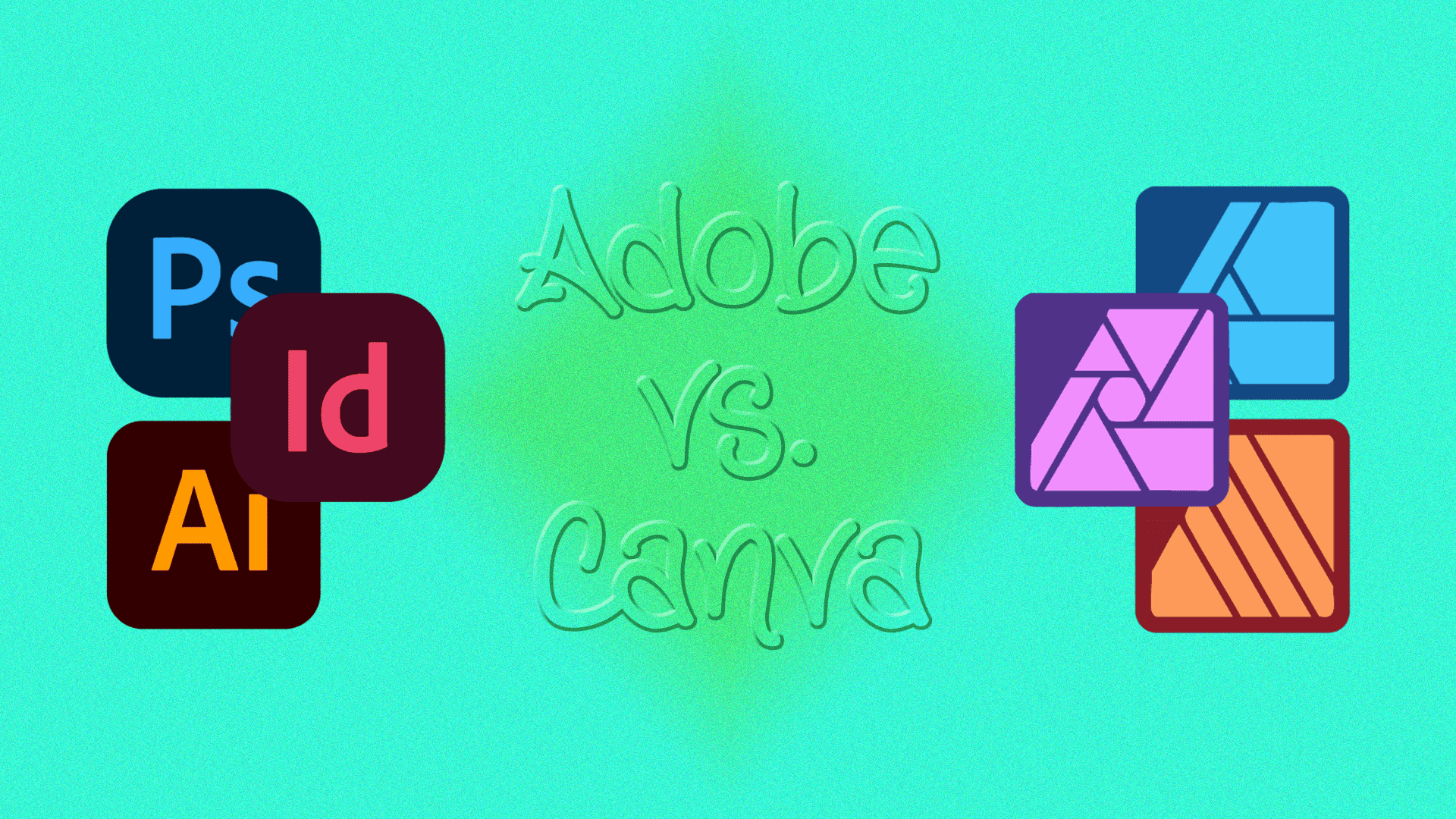
Adobe vs Canva. The Plot Twist Nobody Saw Coming.

TL;DR
Adobe made a big splash at Adobe MAX with powerful new AI-driven updates to Photoshop and Illustrator. Then Canva quietly dropped a bombshell sending the design world into a frenzy. Online debates erupted about which tool makes you a "real designer." DSRPT's take? The whole argument misses the point. The best tool is whichever one gets the job done fastest and best.
It’s been chaos in the design world.
Adobe pulled out all the stops at Adobe MAX with AI tools that think for you. Photoshop on steroids and Illustrator updates that feel like magic. Everyone was clapping. Then Canva walked in.
No press conference. No countdown. Just a quiet little bomb. Very Canva-like.
Affinity is now Canva. And it’s free.
The internet went straight into meltdown mode.
The Comment Section Wars
If you’ve been anywhere near Facebook groups or Threads this week you’ve seen it: “If you’re not using Adobe you’re not a real designer.”
People are arguing like this is the Super Bowl of software. But honestly? The whole debate is tired.
At DSRPT we couldn’t care less what tool you use. There isn’t a single day that someone in the office doesn’t shout across the room about a new program or website that can make our jobs easier. The team lives for that kind of discovery.
We don’t believe in sticking to one tool. We believe in adapting to the next one and using the best available tool to ensure that the work is done.
The Real Story
Adobe did what Adobe does best. They flexed. Canva did what Canva does best. They disrupted. This isn’t about who’s the real designer. It’s about who’s evolving. If a tool helps you get from idea to executing faster, that’s what matters. Creativity doesn’t come from the program. It comes from the person using it.
As Aghyad, our Operations Manager, always says, “it’s not the method, it’s the result.” A solid line from his duct tape methodology. Use what you have, get it done, make it great.
So, while the internet argues about loyalty, we’ll be over here testing the next tool that pops up tomorrow. Because at DSRPT, the real flex isn’t which software you use.
It’s how far you can take it.
Frequently Asked Questions
What was Adobe's big announcement at Adobe MAX?
Adobe unveiled a significant suite of AI-powered updates at Adobe MAX, including major enhancements to Photoshop and Illustrator. The upgrades were described as tools that essentially "think for you," dramatically expanding what designers can produce and how quickly they can produce it.
What was Canva's "plot twist" that sent the internet into meltdown?
Without a press conference or major fanfare, Canva announced that it had acquired Affinity and made it entirely free. The quiet, understated way it was dropped made the impact even more dramatic, and the design community reacted almost immediately.
Who is Affinity and why does making it free matter?
Affinity is a professional-grade design software suite that has long been considered a serious, more affordable alternative to Adobe's products. Making it free through Canva removes one of the last remaining barriers to accessing professional design tools, which significantly disrupts the existing market dynamic.
What does this moment signal for the broader design software industry?
It signals that the design tools landscape is being disrupted in real time — both from above (Adobe integrating AI at a deep level) and from below (Canva democratising access to professional tools). The competitive pressure this creates will likely accelerate innovation across the board and give designers of all levels access to capabilities that previously required significant investment.
What is DSRPT's broader philosophy when it comes to new tools and technology?
DSRPT operates with a culture of continuous discovery and adaptation. The team actively looks for new programs and platforms that can make their work better, faster, or more effective — and they don't wait for tools to become industry standard before testing them. As the blog concludes, the real flex isn't which software you use, it's how far you can take it.


